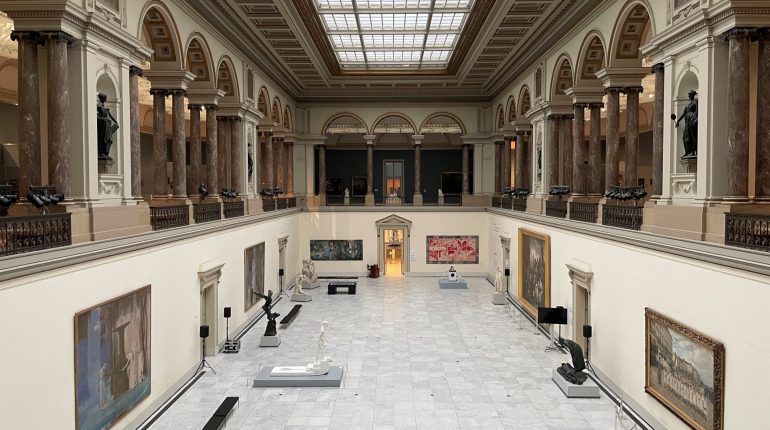
The Royal Museums of Fine Arts of Belgium are undergoing a major transition, preparing for the future while taking into account the needs of current and future audiences. Driven by a change in the museum’s general management, the development of a renewed vision, and a renovation programme due to begin in 2027, the Museums aim to reaffirm their identity and their role within the Belgian and international cultural landscape.
This vision sets out clear strategic objectives and emphasises the coherence of the museum’s narrative: reviewing the presentation of the collections and the museum’s overall collections policy, offering a contemporary and holistic visitor experience, and strengthening the museum’s image.
This transformation goes hand in hand with a genuine design transition, both graphic (vision design) and spatial (spatial design), evolving from a fragmented to a coherent visitor journey. Within this framework, the scenographer plays a key role alongside the curator and the public mediation team: through carefully considered spatial articulation, he or she reinforces the museum’s vision and translates its identity into a tangible experience.
The first phase of the major renovation works will temporarily reduce the available exhibition areas. The collection route, temporarily housed in the Forum as well as in the Balat, Gresham and Argenteau buildings, will serve as a starting point and testing ground for the future exhibition rooms.
The scenography of the new museum route should enable a temporary, sustainable and cost-conscious design, combining creativity and ecology. Within the constraints of the existing building complex, without structural interventions and while respecting the current condition of the rooms, the aim is to create a light, flexible and meaningful scenographic approach.